MAC-Lab · Affective Computing & Human Factors · HFUT MAC-Lab · 情感计算与人因工程 · 合肥工业大学
Affective AI for people in real environments 让 AI 更懂真实环境中的人 Multimodal Affective Computing and Human Factors Engineering Laboratory 多模态情感计算与人因工程实验室 · 合肥工业大学
MAC-Lab starts from multimedia affective computing and follows one long route through natural language processing, human-computer interaction, ubiquitous psychological computing, and embodied emotional intelligence. The lab cares about algorithms, and it also cares whether those algorithms can enter schools, healthcare, mobility, human-factors, and public-service scenarios with long-term value. MAC-Lab 从多模态情感计算出发,沿着自然语言处理、人机交互、普适心理计算和具身情感智能持续推进。我们关心算法本身,也关心算法进入学校、健康、交通、人因和公共服务场景之后,是否还能被长期使用、持续迭代并产生真实价值。
- 20+
- years on one research spine年连续研究主线
- 60+
- high-impact first/corresponding-author papers篇高水平论文沉淀核心算法
- 80+
- patents and software copyrights项专利与软著积累
- 200k+
- users reached by psychological computing systems心理计算系统服务用户
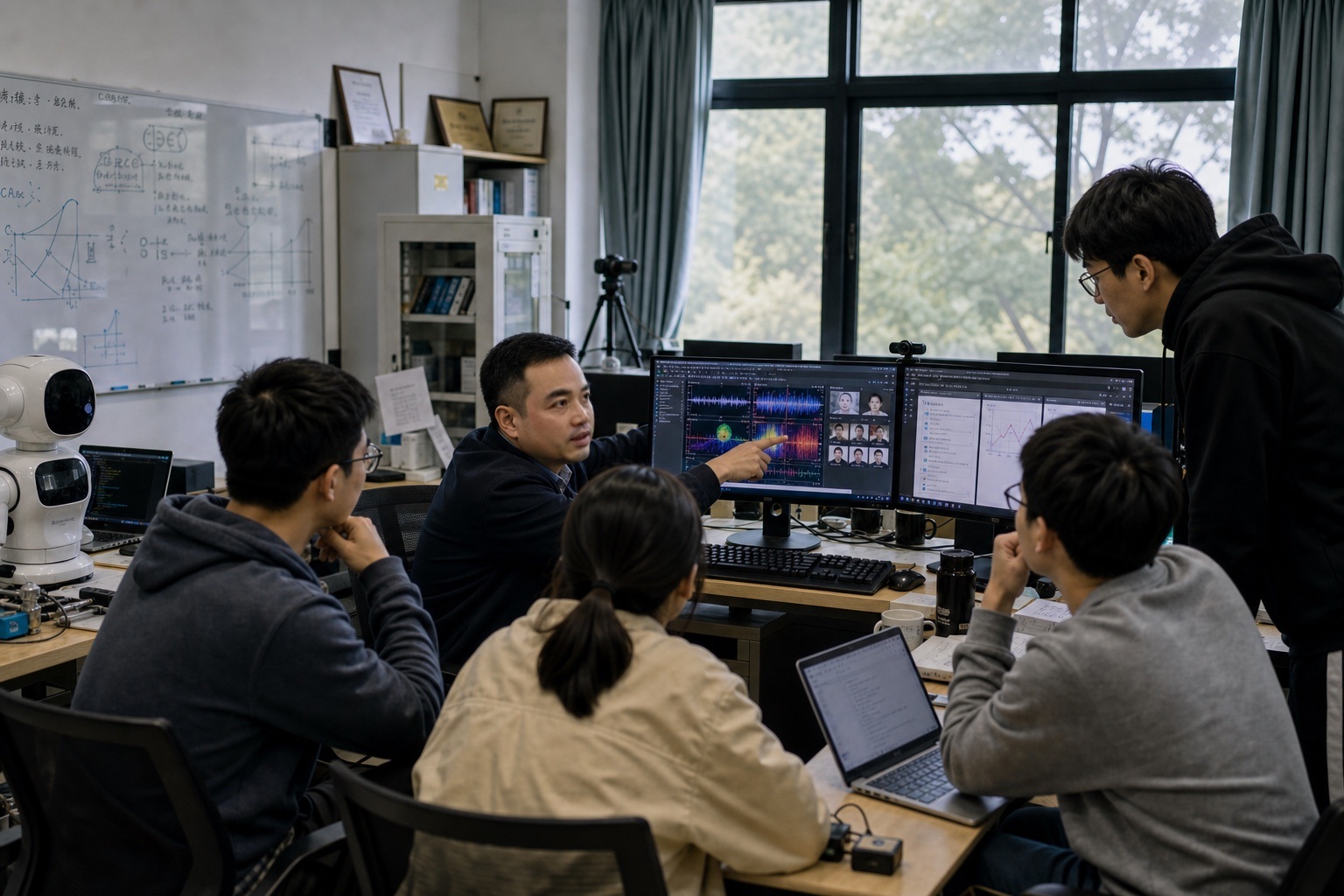
A shared foundation. A continuing research route.共同奠基,持续拓展的研究路线
Professor Xiao Sun and his mentor Professor Fuji Ren jointly advanced affective computing at HFUT. Building on this foundation, Sun’s team continues from language and emotion toward ubiquitous psychological computing, embodied intelligence, and human factors engineering.孙晓教授与导师任福继教授共同推动合肥工业大学情感计算方向的早期建设。在这一基础上,孙晓教授团队沿着语言、情感与心理计算的研究主线,持续向具身智能与人因工程拓展。
From human understanding to human-machine collaboration从理解人的状态,到支持人机协作
Multimodal affective computing多模态情感计算
How do language, speech, expression, and behavior jointly convey emotion? We study contextual understanding and robust fusion.语言、语音、表情与行为如何共同表达情感?研究情境理解、跨模态融合与复杂情绪建模。
Ubiquitous psychological computing普适心理计算
How do mental states change over time and across contexts? We connect individual baselines, continuous observations, and human review.心理状态如何随时间与情境变化?连接个体基线、连续观察与人工复核,研究长期状态建模。
Edge & embodied affective intelligence端侧与具身情感智能
How can affective models operate on physical devices? We investigate efficient inference, signal quality, memory, and situated interaction.情感模型如何在真实设备上持续运行?探索资源约束下的推理、信号质量、情感记忆与情境交互。
Cognitive & human factors engineering认知与人因工程
How do people, tasks, equipment, and environments interact? We study workload, fatigue, stress, and human-machine collaboration.人、任务、装备与环境如何相互影响?研究认知负荷、疲劳压力、任务表现与人机协同。
MULTIMODAL UNDERSTANDING多模态理解
One sentence. More than one signal.一句话,不止一种信号。
“I’m fine. Let’s keep going.”“我没事,继续吧。”
Explore how language, voice, behavior and context contribute to understanding.从语言、语音、行为与情境,看看不同信息如何参与理解。
Fictional example · Research illustration. No personal data is collected.虚构示例 · 研究示意,不采集个人信息。Words are a starting point话语是理解的起点
Literal meaning provides one view. Dialogue history and the speaker’s intent still matter.字面上是在表达可以继续。但这句话也可能是回应、安慰或结束话题,需要结合前后文。
Contextual semantics · Dialogue modeling情境语义 · 对话建模
How it is said adds information表达方式提供另一层信息
Pauses, pace and tone can complement words. They do not establish a person’s psychological state on their own.停顿、语速和语调可以补充文字没有表达的信息,但单一声学特征不能直接证明一个人的心理状态。
Acoustic representation · Cross-modal alignment声学表征 · 跨模态对齐
Observe patterns over time观察连续变化,而非一个瞬间
Expression and movement become more meaningful alongside personal baselines, signal quality and observations over time.表情与动作需要放在连续观察中,结合个体基线、信号质量和变化趋势理解。一个瞬间不能替代完整判断。
Temporal modeling · Individual baselines时序建模 · 个体基线
A person is always in a situation把人放回任务与环境中
Task demands, relationships and environmental conditions help frame interpretation and appropriate support.同一句话出现在驾驶、学习或交流中,含义可能不同。任务要求、关系与环境共同决定如何理解,以及是否需要进一步确认。
Human factors · Human–AI collaboration人因工程 · 人机协作
Find the right entrance从你关心的问题进入 MAC-Lab
Students, academic peers, and industry partners usually come with different questions. The lab keeps one research route, but offers different ways to read it. 从学生的科研训练,到同行的学术交流,再到伙伴的场景合作,围绕同一条研究主线共同推进。
Competitions, papers, systems, and growth routes竞赛、论文、系统和成长路径
Undergraduates, master's students, academic PhD students, and engineering doctorate candidates can find training routes, research topics, and platform support.本科生、硕士生、学术博士和工程博士可以看到实验室如何支持竞赛、科研、系统研发和真实项目训练。
For Researchers学术入口Affective NLP, multimodal emotion, psychological computing情感 NLP、多模态情绪和心理计算
Explore the lab's research map, concept pages, selected papers, platforms, and long-term HFUT affective-computing route.进入研究地图、概念页、代表论文、平台能力和合工大情感计算长期建设脉络。
For Partners合作入口Scene definition, sensing, assessment, intervention, delivery场景定义、感知评估、干预优化和交付
See how affective computing, human factors, and mind-body intelligence become deployable software-hardware systems.了解情感计算、人因工程和身心智能如何进入可试点、可交付、可长期迭代的软硬件系统。
From language understanding to deployable psychological intelligence从语言理解走向可部署的心理智能
MAC-Lab keeps one long route: language, emotion, multimodal perception, psychological computing, and embodied interaction. These connected areas support systems that extend from signal sensing to sustained interaction. MAC-Lab 保持一条长期路线:语言、情感、多模态感知、心理计算和具身交互。这些研究相互衔接,支持从信号感知到长期交互的系统研发。
Natural language processing, dialogue, semantics, and affective language understanding.自然语言处理、对话、语义理解和情感语言理解。
Human-machine dialogue, affective semantics, emotional interaction, and Chinese affective resources.人机对话、情感语义、情感交互和中文情感资源。
Text, speech, face, behavior, physiology, environment, and interaction traces.文本、语音、面部、行为、生理、环境和交互轨迹。
Mind-body profiling, assessment, early awareness, support, and long-term systems.身心画像、评估、早期感知、支持和长期运行系统。
Digital humans, robots, companion agents, smart cockpits, and active health.数字人、机器人、陪伴智能体、智能座舱和主动健康。
Two core frameworks两条核心框架
Framework details查看框架详情Modeling mental states in real life, not only in questionnaires or short conversations.在真实生活中建模心理状态,而不只停留在问卷或短对话里。
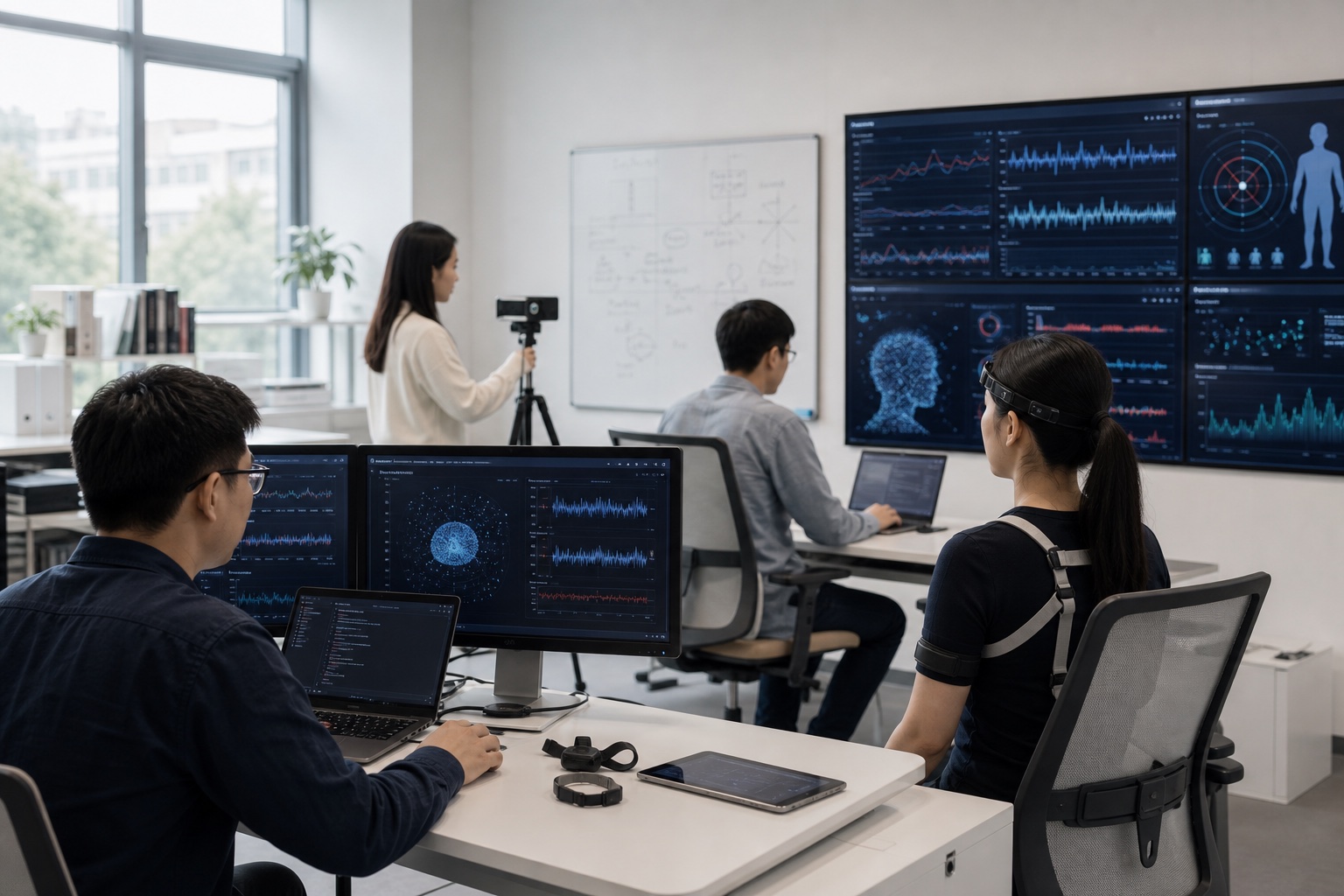
Ubiquitous Psychological Computing links time, environment, personality, physiology, behavior, social relationship, and task pressure, connecting perception, profiling, assessment, early warning, and support.普适心理计算连接时间、环境、个体差异、生理行为信号、社会关系和任务压力,把感知、画像、评估、预警与支持放入同一条技术路线。
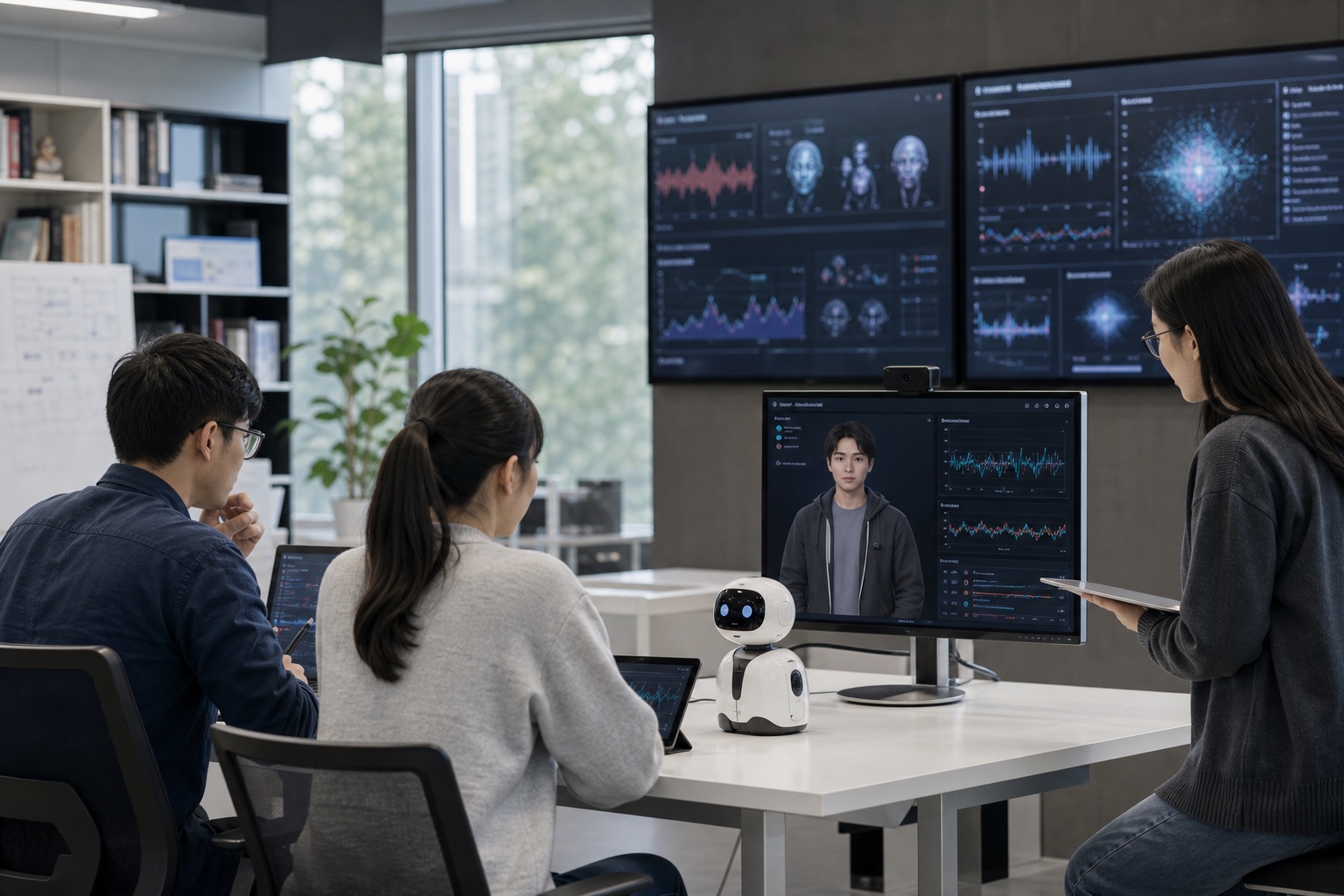
Giving embodied agents an affective layer for situated interaction.为具身智能体增加面向情境交互的情感层。
The framework studies emotional perception, understanding, expression, and interaction for robots, digital humans, smart cockpits, eldercare companions, and active-health systems.该框架面向机器人、数字人、智能座舱、养老陪伴和主动健康系统,研究情感感知、理解、表达与交互的一体化能力。
Evidence that can be checked from different angles从不同角度都能看到的积累
Publications, projects, patents, systems, standards, awards, media coverage, and student outcomes form the lab's evidence base. None of them alone tells the full story. Together they show a research group that can keep moving from theory to system and from system to scenario. 论文、项目、专利、系统、标准、奖项、媒体报道和学生成果共同构成实验室的积累。任何单项都不能说明全部,但放在一起,可以看到一个团队如何从理论走向系统,再从系统进入场景。
IEEE and ACM Transactions, ACL, EMNLP, CVPR, ACM Multimedia, ICASSP, AAAIIEEE 与 ACM 汇刊,ACL、EMNLP、CVPR、ACM MM、ICASSP、AAAI 等代表性发表平台
The publication route connects affective NLP, dialogue emotion recognition, multimodal affective perception, mental-state modeling, social computing, and human-centered AI.发表领域覆盖情感自然语言处理、对话情绪识别、多模态情感感知、心理状态建模、社会计算和以人为中心的人工智能。
MindMirror · MindScore · MindTalk · MindOS · MindPet · MemOS-Mind
The Mind-series platforms carry near-distance, mid-distance, and remote mental-state sensing, psychological profiling, affective dialogue, cognitive support, and scene-oriented deployment.Mind 系列平台承载近距离、中距离和远距离心智感知,心理画像、情感对话、认知支持和面向场景的系统交付。
MAC-Lab keeps academic exchange and collaboration with leading universities, including the National University of Defense Technology, University of Science and Technology of China, University of Electronic Science and Technology of China, Tsinghua University, Harbin Institute of Technology, East China Normal University, and Beijing Normal University.实验室与国防科技大学、中国科学技术大学、电子科技大学、清华大学、哈尔滨工业大学、华东师范大学、北京师范大学等高校保持合作交流,并开展研究生联合培养与跨场景研究协作。
Affective and human-factors problems need a complete route情感与人因问题需要完整路线
Industry partners often begin with one request: recognize emotion, measure stress, detect fatigue, assess mental state, or improve human performance. The real work is to define the scene, select reliable signals, interpret the state, design the support method, and deliver a system that can keep working after the demo. 产业伙伴常从一个具体需求开始:识别情绪、测量压力、检测疲劳、评估心理状态,或者提升身心效能。真正有用的工作还要继续向前:定义场景,选择可靠信号,解释状态含义,设计支持方法,并交付一个离开演示环境之后还能持续工作的系统。
Explore solutions查看行业方案Perceive感知
speech, text, expression, behavior, physiology, interaction traces, and environment语音、文本、表情、行为、生理、交互轨迹与环境信息
Interpret解释
stress, fatigue, attention, motivation, cognitive load, risk, and role-fit state压力、疲劳、注意、动机、认知负荷、风险和岗位适配状态
Improve优化
assessment devices, dashboards, intervention cabins, digital humans, smart devices, and platform services评测设备、管理看板、干预座舱、数字人、智能终端和平台服务
A platform where students can build real momentum让学生真正跑起来的平台
People and training团队与学生Use competitions as a first training ground用竞赛训练完整能力
Innovation, AI, robotics, IoT, digital media, and multimodal affective-computing challenges help students learn how to define problems and deliver visible work.创新创业、人工智能、机器人、物联网、数字媒体和多模态情感计算挑战,让学生在真实题目中训练选题、表达、系统实现和团队协作。
Let good prototypes keep growing让好的原型继续生长
Promising work is encouraged to grow into papers, patents, datasets, software copyrights, demos, and longer research questions.有价值的想法会继续打磨成论文、专利、数据集、软著、演示系统和更长期的科研问题。
Work on platforms that already have field context依托已有平台继续做深
Students can enter Mind-series platforms, psychological assessment devices, digital humans, embodied agents, and AI-assisted mind-body health systems.学生可以进入 Mind 系列平台、心理测评一体机、数字人、具身智能体和 AI 身心健康系统,在已有基础上继续深化。
Recent signals近期信号
Lab news, frontier papers, calls, and public communication are kept active so visitors can see how the research route is moving. 实验室新闻、前沿论文、征稿机会和公共表达会持续更新,让访客看到这条研究路线正在怎样向前推进。
每日精选Daily reading
前沿与机遇 →Frontiers & opportunities →资料更新 2026-10-20 · 保留原文日期与来源
- 通过多教师蒸馏框架学习多个互补的语音表示Learning Speech Attribute Representations via Multi-Teacher Distillation2026-10-15 · 情感与多模态感知
- RISHAB-999/TherapiquesRISHAB-999/Therapiques2026-10-19 · 心智与人机交互
- Timestral: Mistral's time-series foundation modelsTimestral: Mistral's time-series foundation models2026-10-19 · 心智与人机交互
Lab updates实验室动态
All news全部新闻Calls征稿与机会
View calls查看机会Field notes深度札记
Read notes进入札记Academic excellence, public value学术影响与社会价值
The lab publishes in international AI, affective computing, speech, vision, multimedia, and HCI venues. At the same time, it has moved systems into digital health, smart mental-care services, healthy living, smart mobility, education, and human-factors scenarios. This combination matters: strong theory makes systems deeper, and real deployment keeps research honest. 团队论文发表于人工智能、情感计算、语音、视觉、多媒体和人机交互等国际重要发表平台;系统成果进入数字健康、智能心理服务、健康人居、智慧交通、教育和人因工程场景。理论让系统更深,真实场景让研究更稳,这是 MAC-Lab 一直坚持的路线。
- 2025 Silver Award · 11th International Exhibition of Inventions, Belt and Road & BRICS Competition2025 国际发明展览会·“一带一路”暨金砖国家技能发展与技术创新大赛银奖
- First Prize, Anhui Provincial Science and Technology Award安徽省科学技术奖一等奖
- First Prize, Ministry of Education Science and Technology Progress Award教育部高等学校科学研究优秀成果奖科学技术进步一等奖
- Wu Wenjun AI Science and Technology Progress Award吴文俊人工智能科学技术进步奖三等奖
- First Place, National General AI Innovation Application Competition全国通用人工智能创新应用大赛第一名
- Selected as a national digital-health exemplary case国家卫健委数字健康典型优秀案例
Media and public communication媒体关注与公共表达
All coverage and public records (26 entries)全部报道与公开记录(26条索引)从2013年的情感机器人报道到近期情感支持系统与具身交互成果,团队的公开影响持续延伸至国际科技传播、专业学术交流、学生培养和场景应用。Coverage since 2013 connects the team’s affective robots with emotional-support systems and embodied interaction, spanning international science media, academic exchange, student development and applications. 查看总体影响评价Overall impact
EmoAda in an international science interview国际科技媒体采访:EmoAda情感支持系统
A direct interview with Xiao Sun introduces the team’s multimodal emotional-support research.Tech Xplore 直接采访孙晓,介绍团队的多模态情感支持研究;原始报道与跟进传播在媒体页集中展示。
Read source查看原文全国大模型与具身交互大会在合肥举行Large models and embodied interaction conference in Hefei
汇集安徽日报、北京科技报、合肥新闻联播及腾讯新闻等传播入口,共11条大会报道与学会、高校记录索引。Explore 11 reports from media, CAAI, and participating universities.
查看专题View coverageDecoding Emotion, Empowering Mind-Body Health解码情感,智惠身心
The feature presents Professor Xiao Sun's team through the long-running development of embodied emotional interaction models, connecting the lab's path from affective robots and large-scale Chinese emotional resources to Ubiquitous Psychological Computing, EmoAda, PsyCoLLM, and embodied emotional intelligence.报道以合肥工业大学孙晓教授团队“具身情感交互大模型突破之路”为主线,梳理团队从情感机器人、中文情感资源,到普适心理计算、EmoAda、PsyCoLLM 与具身情感智能的长期建设。
Read Story阅读全文Embodied Emotional Intelligence Platform Released in Hefei让 AI 有“情商”:具身情感智能平台在合肥发布
The report described Embodied Emotional Intelligence as a frontier direction of embodied AI and introduced the platform release in Hefei, positioning emotional interaction as a key step for AI to move from task tool to trusted partner.报道将具身情感智能定位为具身智能的前沿方向,并介绍合工大研究团队创办企业发布具身情感智能平台,强调情感交互是 AI 从工具走向伙伴的重要一步。
Read Story阅读全文The emotional robot “Sisi” featured in regional news情感机器人“思思”亮相安徽新闻联播
The report highlighted the team's work on affective robots, Chinese emotional resources, and multimodal affective computing.报道呈现团队在情感机器人、中文情感资源和多模态情感计算方向上的长期探索。
Read story查看报道Innovating AI to safeguard mental health创新人工智能,守护心理健康
A public feature on MAC-Lab's psychological computing systems, mental-health platforms, and social application.系统报道 MAC-Lab 在 AI 心理健康、智能心理监护系统和产业转化中的探索。
Read story查看报道A public account for sharing affective AI with more people实验室公众号“让AI更懂人”发布
The account records research progress, student training, platform development, and real-world applications in affective AI and psychological computing.公众号将围绕情感计算、心理计算、具身情感智能、学生培养、平台建设和真实场景 AI 应用持续更新。
Read update查看动态
Training AI researchers with technical depth and human warmth培养有技术深度,也理解人的 AI 研究者
MAC-Lab welcomes students who want to grow through competitions, publish serious research, build deployable systems, and communicate science responsibly. The lab encourages cross-disciplinary work across AI, psychology, medicine, education, human factors, and product-oriented engineering. MAC-Lab 欢迎愿意通过竞赛训练能力、通过科研沉淀成果、通过系统建设理解真实问题的学生。实验室鼓励跨学科、重实践、敢表达,把人工智能、心理学、医学、教育、人因工程和产品化工程连接起来。